
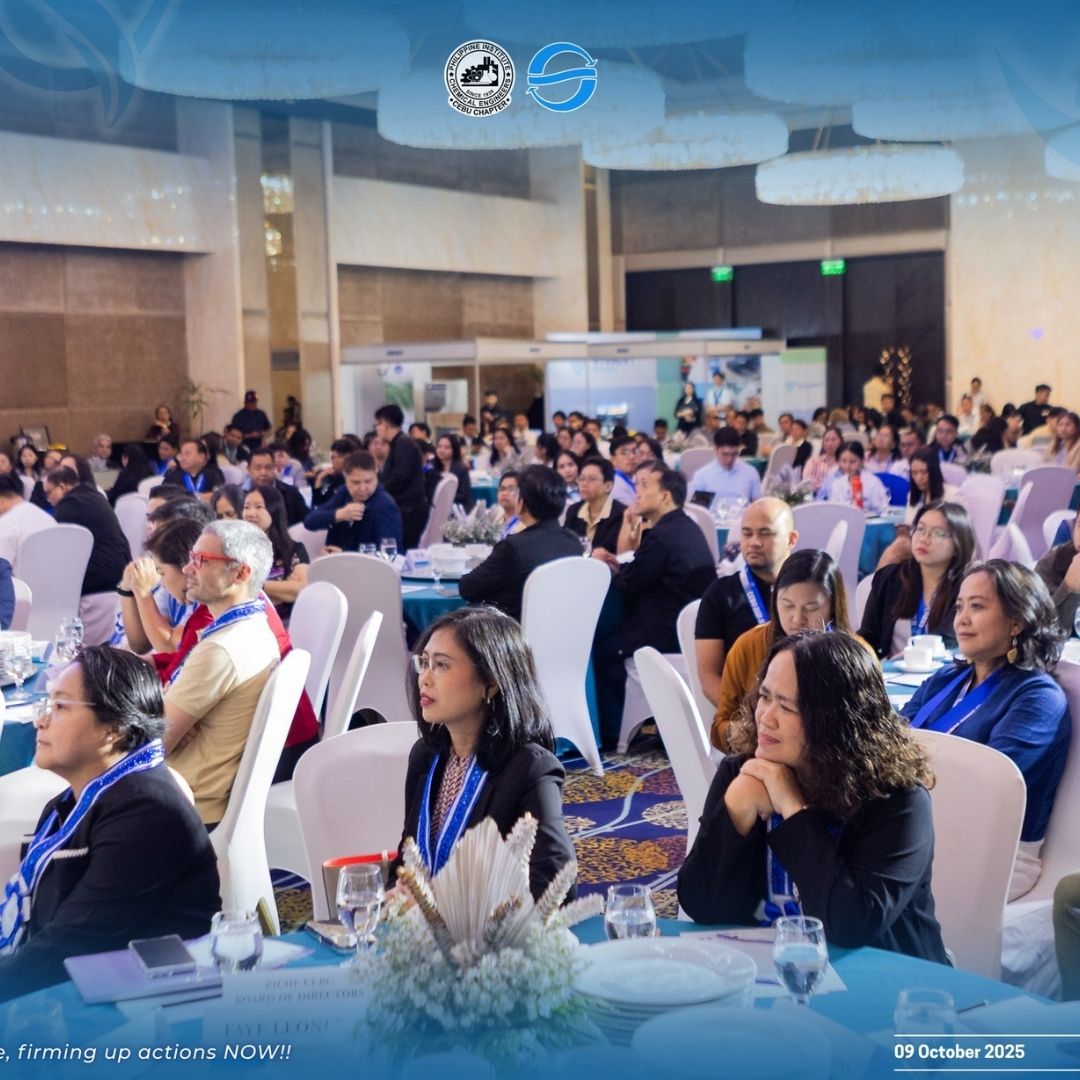
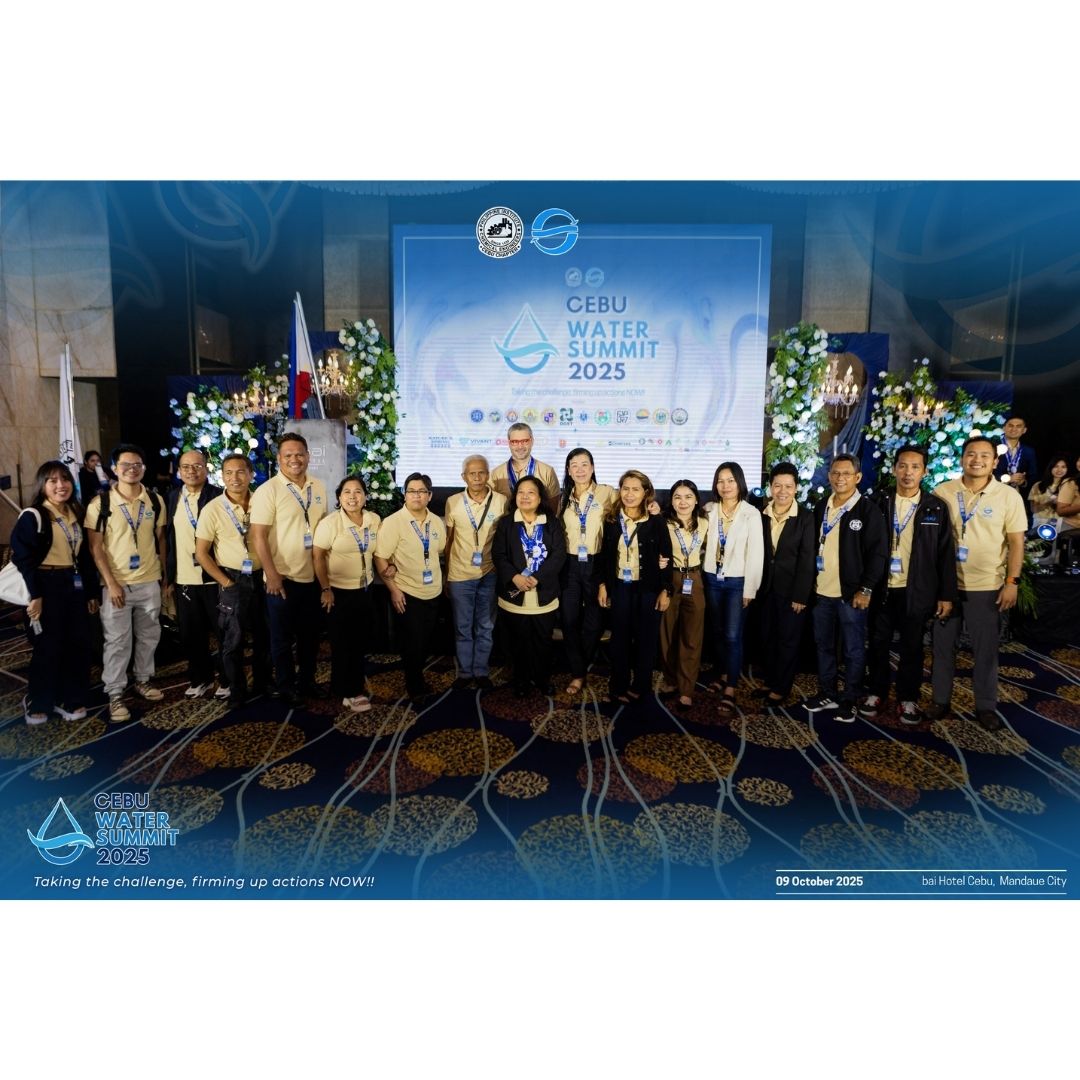
On October 9, 2025, water stakeholders in Cebu, i.e., water suppliers, local government units, national government agencies, academe and professional groups, and civil society organizations, gathered again in Bai Hotel, Mandaue City, after the Cebu Water Summit conducted in March 2023. With the theme, “Taking the Challenge, Firming Up Actions NOW!!”, the summit was aimed at presenting and validating the results of the water cluster workshops conducted from July to August 2025, strengthening multi-stakeholder dialogues and cooperation, fostering data knowledge sharing and enhancing technical and organizational capacities, and harmonizing water advocacy and public awareness campaigns.
Furthermore, it targeted on fostering connections among stakeholders and encouraging long-term commitments to tackle Cebu’s challenges in water security and wastewater management, generating support and secure commitments from key stakeholders from the public and private sectors and the civil society, and offering the participants opportunities to learn from experts in water and wastewater management. The Cebu water stakeholder community made the shift from 2023’s CWS themed “Turning the Tide on Cebu’s Future through Collaboration and Sustainability,” to institutionalizing Integrated Water Resources Management, strengthening Data sharing, Education, and Awareness and Policy Advocacy (IWRM-DEAP), a framework for intensifying water security in Metro Cebu.
The prominent water-related challenges identified during the summit were: 1) fragmented institutional governance, 2) policy enforcement and monitoring deficiencies, 3) low compliance with water quality standards, and 4) service and infrastructure gaps. To counter these issues, the IWRM-DEAP was proposed as a framework and operationalized into a structured institutional model uniting water management across Cebu through inter-LGU and inter-agency coordination, shared and accessible data for evidence-based policymaking, capacity-building and public awareness initiatives, and sustained policy advocacy and institutional alignment. Additionally, the establishment of the IWRM Governance Mechanism for the Province of Cebu, as recommended by the Water REMIND Project in 2003, was put forward. It is a multisectoral coordinating body composed of LGU representatives and supported by national government agencies, private utilities, the academe, and civil society to lead the operations.
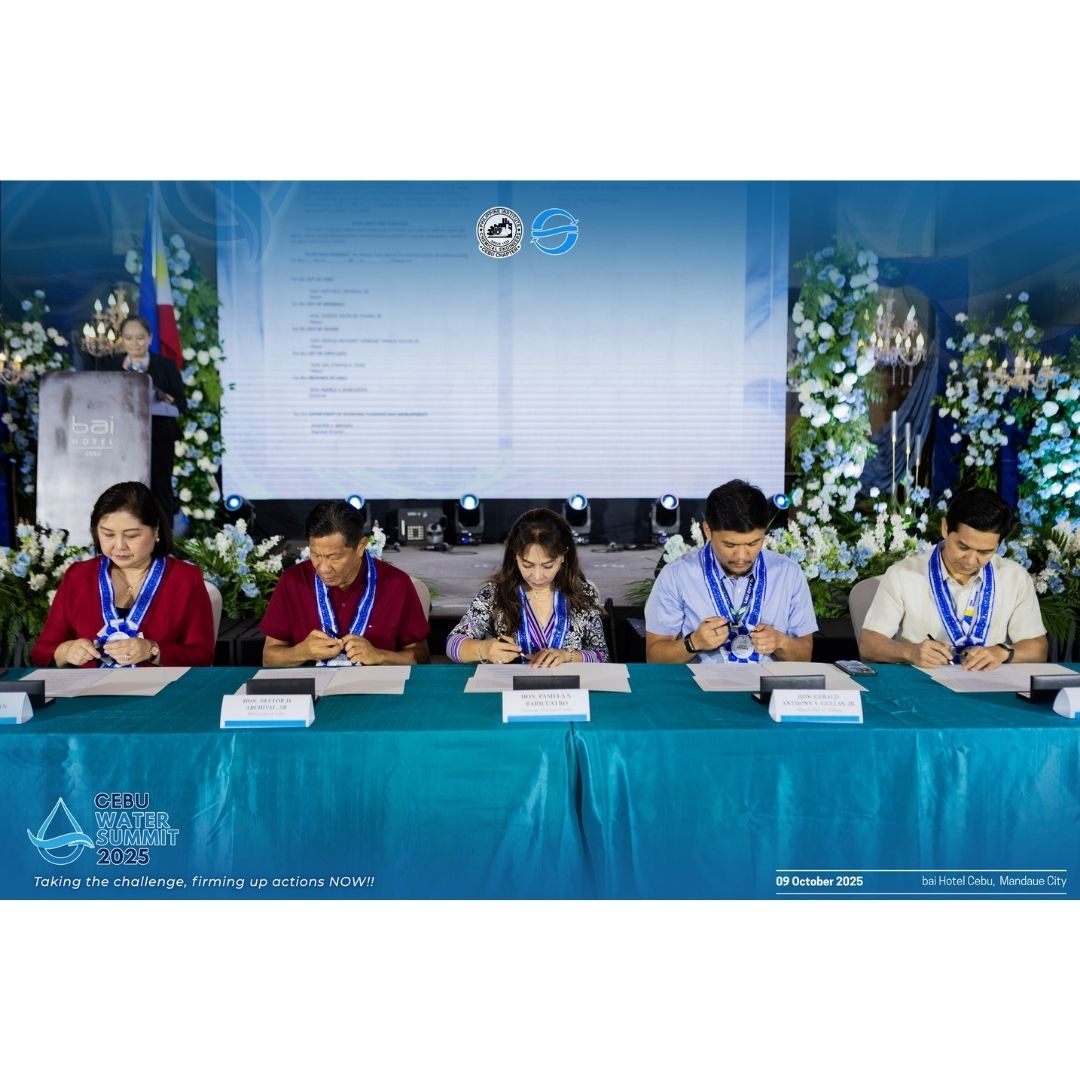
Another highlight of the summit includes the signing of a Memorandum of Understanding among Cebu provincial government offices from the cities of Cebu, Mandaue, Lapulapu, and Talisay, the University of San Carlos Water Resources Center Foundation, and the Philippine Institute of Chemical Engineers Cebu Chapter, ratifying the joint commitment to promote integrated water resources management (IWRM) through advocacy and coordinated initiatives. the planning, data systems, infrastructure development, and policy alignment as science-based solutions to the current crises. Each agency was represented by Cebu City Mayor Nestor Archival, Talisay City Mayor Gerald Anthony Gullas Jr., Mandaue City Mayor Thadeo Jovito Ouano Jr., Lapu-Lapu City Mayor Maria Cynthia Tan, and Cebu Governor Pamela Baricuatro, who former Provincial Board Member Gigi Sanchez represented, were present in the signing. There was also a presentation of Potential Public-Private Partnership opportunities with Aboitiz InfraCapital, Vivant Water, and Diversey, and a presentation of knowledge on Challenges in Protecting Groundwater resources: a multi-continent perspective and PFAS, the Forever Chemicals: Unseen, Persistent, Urgent! The Water Security Index of Mandaue City and the Beyond Borders Flood Management Cooperation Program between the cities of Cebu and Mandaue were emphasized to address the water challenges.
Aside from these, the DOST offered the 2023-2028 Water Security Roadmap to address nationwide issues such as water scarcity, flooding, and pollution. With this, it ensures evidence-based water sector planning, predictive analytics, and technology-based solutions. The DOST also conducted water-related initiatives to reinforce the strategy of striving towards efficient water resource management and environmental sustainability. One of these initiatives was the Installation of Standby Wells for Emergencies and Research (ISWEAR Project), promoting the security of potable water supply during disasters. Another example was the Integrated Stormwater Management System (ISWM), incorporating green infrastructure and membrane microfiltration to mitigate flooding and to enable rainwater use. The summit was led by the collaborative organizations of USC Water Resources Center and the Philippine Institute of Chemical Engineers – Cebu Chapter (PIChE Cebu), supported by the Department of Science and Technology Region VII (DOST VII), the Department of Economy, Planning, and Development Region VII (DEPDev VII), the Professional Regulation Commission Region VII (PRC VII), the Federation of Accredited Professional Organizations Region VII (FAPOR-7), the Province of Cebu, the Cities of Cebu, Lapu-Lapu and Mandaue, and the Municipalities of Mandaue, Consolacion, and Liloan.
As part of its action plan, the summit identified an organization to serve as the Water Knowledge Center for data users to have easy access to water data and increased the number of water experts in the identified Water Knowledge Center. The mobilization of financial support from members of the IWRM Governance Mechanism to enhance USC WRCFI’s resources was also a significant objective. With harmful risks due to resource depletion, climate impacts, and emerging contaminants, the IWRM-DEAP acts as a remedy to desalinate waters, harvest rainwater, and effectively reuse wastewater. In addition, it rehabilitates groundwater sources and optimizes technology-driven resources. However, reliable monitoring, sufficient funding, and dynamic involvement between government agencies are necessary for the IWRM-DEAP framework to bear fruit. Thus, the Cebu Water Summit urges its members to go beyond being observers to active administrators of these water-related procedures and systems.


0 Comments